David didn't leave because of any single thing that went wrong.
The relationship was twelve years old. The contracts were still profitable on both sides. Then his name showed up on a competitor's press release as a strategic partner, and three months later the volume started shifting, and six months after that he was gone.
When the account manager finally got him on the phone and asked, honestly, what had happened, David took a long moment before answering.
"You don't feel like the same company anymore."
That was the whole explanation. He couldn't sharpen it further than that.
You may have your own David. You just may not know it yet.
By the time the numbers turn, the reality inside the building has already been broadcasting outward for months. Your customers can see something about you that you cannot. They don't have your dashboards. They have something better: the experience of dealing with you, quarter after quarter, accumulating into a quiet conclusion about whether you are becoming more or becoming less.
David could feel it. He just couldn't explain it any more clearly than he did on that phone call.
Every organization is running one of two modes at any given time, and most leaders cannot tell which one they are in.
In growth mode, your team is doing things this quarter they could not do last quarter. Conversations ask more of the person across the table than information. People are bringing forward work that was not requested. Your leads are surprising you, raising questions you had not thought to raise, taking on stretches without being told. You are no longer the smartest person about every problem, because the people around you are getting smarter every month. The room feels different. You can feel the slope.
In maintenance mode, the work gets done. The numbers hold. Meetings start on time and end on time. Conversations are professional, efficient, and brief. What's the status. Here's the status. Okay, next. Leaders track. Reports check. Everyone meets expectations and nobody exceeds them. There is nothing visibly wrong with this picture.
That is exactly why it is so dangerous.
Maintenance mode is not laziness. It is not failure. It is what a competent organization run by responsible adults looks like on a Tuesday. It is the default state of any system that has worked hard to get good at what it already does, and it feels like progress because it produces output.
A few signs you may have already seen:
- Your one-on-ones run on rails. Status, blockers, next steps. They could be conducted by a calendar invitation.
- Your high-potential people stopped raising their hands eight months ago, and you assumed they were just heads-down.
- Your team meetings cover everything and decide almost nothing.
- You can recite your last three quarterly reviews from memory because the categories never change.
What other signs have you seen in your or another organization?
The reason this matters is not because the signs are alarming. It is because they are not alarming. That is the architecture of the problem.
There is a principle I have carried with me for a long time. I call it the Law of Growth.
Things that grow, thrive. Things that stop growing have already started to die.
This is not metaphor. It is what the natural world does. A coral reef that stops growing is already bleaching. A forest that stops growing is already burning, even if the smoke is not yet visible. Growth is the only thing that keeps living systems alive. That's not hyperbole, it's evolutionary biology.
The same law governs organizations. Businesses grow only when the people inside them are growing. When that stops, everything that depends on it begins to fade. Initiative. Ownership. Judgment. Momentum.
The organization does not collapse. It slowly loses altitude.
Here is the harder consequence. Every stakeholder you have, your customers, your shareholders, your partners, the best people on your team, needs to believe your tomorrow will be better than your today. That belief is the entire basis on which they keep betting on you.
The moment they stop believing it, they begin quietly and systematically replacing you.
They aren't angry. They are reading the slope. Growth is the only thing that makes you worth keeping for the next decade, and they are scanning for it whether you know it or not.
David didn't fire you. He stopped believing in your tomorrow.
So how do you avoid the slow defection of customers, of capital, of your best people?
You will hear plenty of answers. A new strategy. A restructure. A platform investment. A leadership development initiative. All of them can be real, and all of them are downstream. Growth in an organization does not happen in a town hall or a strategic plan. It happens one conversation at a time, in the rooms where you are actually with your people. That is where capacity is built or quietly suppressed. That is where the next quarter is decided.
Which means growth cannot be a quarterly priority. Vince Lombardi said winning was not a sometime thing, it was an all-the-time thing. Growth works the same way. Everywhere, all the time, all at once, until it is woven into how the building actually works.
Growth has to be in your DNA. That is what survival looks like for any organization that intends to be here in five years.
Which leads to the line that sits at the center of everything I am going to write between now and September:
Growing people is not how you support the business. It is how the business grows.
The moment your organization stops growing its people, not slows down, stops, entropy takes over. Maintenance creeps in. The conversations thin out. Somewhere out there, your David starts to feel it before you do.
So look at three questions this week.
- How many of your people are visibly on a growth trajectory right now, where you can see their current role will not hold them much longer?
- Are they doing things this quarter they could not have done last quarter?
- Is your team surprising you, bringing you work you did not ask for, raising questions you had not thought to raise?
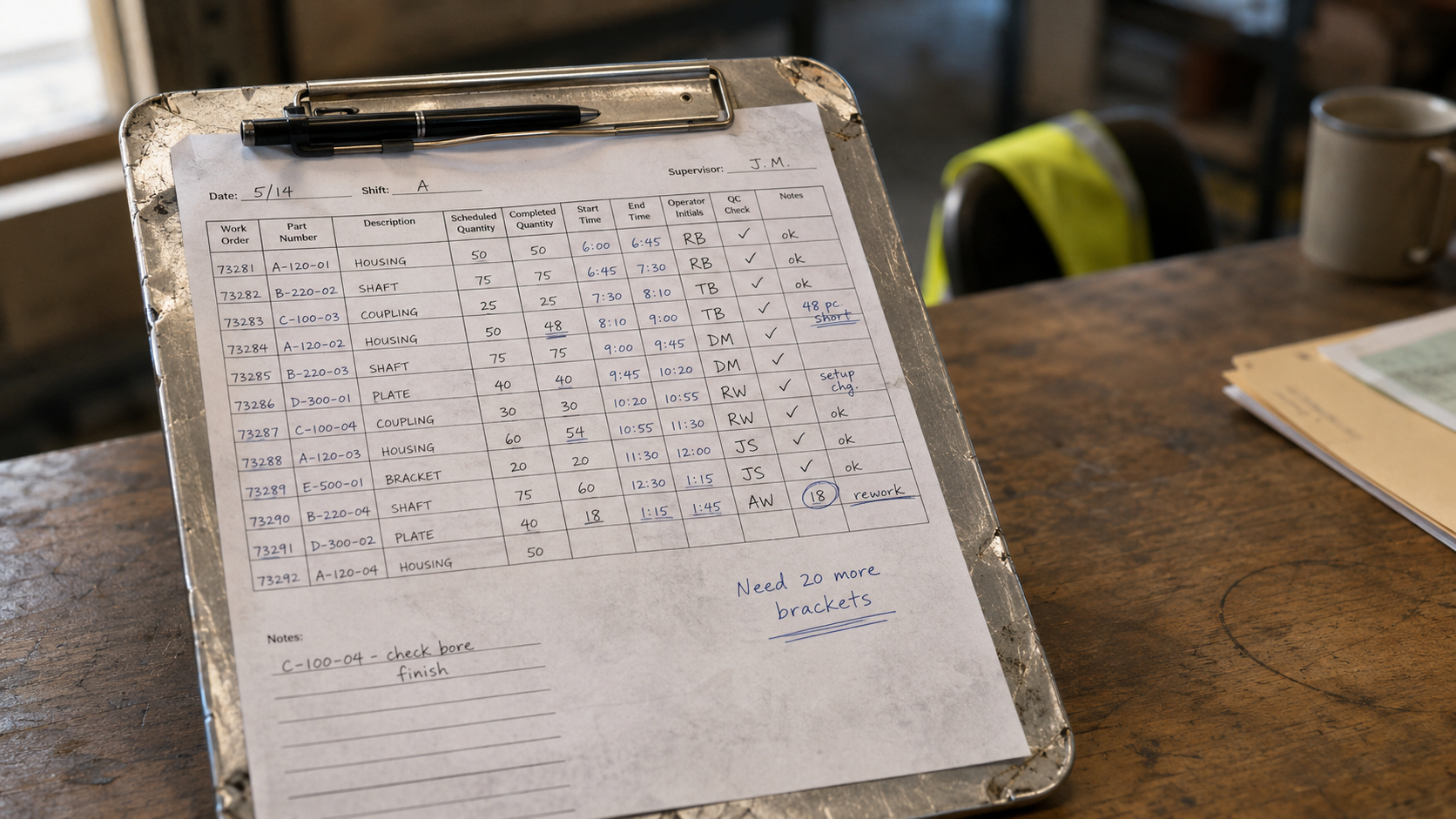
If you cannot answer yes to any of those, grab your clipboard.
You are living in maintenance mode.
If you want to explore ways to drive growth in your team, get ready for my new book, Momentum Leadership, coming this fall. More details in future newsletters.